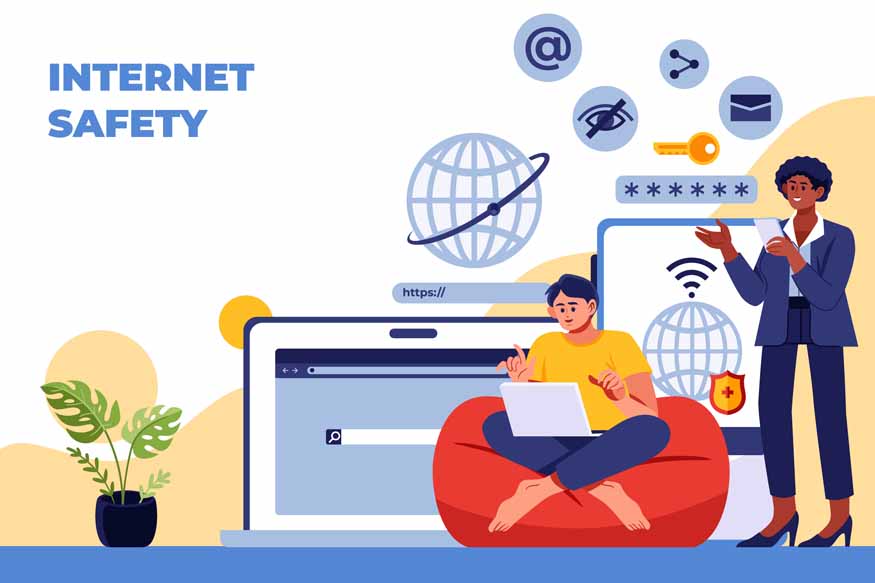
The internet opens up an enormous amount for students — information, creativity, connection — but using it well means understanding what to watch out for. Cyberbullying, phoney texts, and weak passwords are some online threats that students might face. They can stay secure and use the internet with confidence if they learn safe internet behaviours at a young age. Internet safety tips for students aren’t about restricting access — they’re about making sure every student knows how to protect themselves while making the most of what the internet offers. Every modern CBSE schools in Nagpur weaves responsible technology use into everyday classroom activities rather than treating it as a separate lesson.
What Is Internet Safety and Why Does It Matter for Students?
The internet is one of the most useful tools a student has — and one of the easiest to misuse without realising it. Personal information shared carelessly, harmful websites, uncomfortable online interactions — these risks are real. Using the internet with enough awareness to stay safe is the goal of safe online practices, not cutting back on usage. By incorporating this into class discussions, schools provide students with a useful tool that they may use each time they explore the internet.
How Students Can Create Strong Passwords and Protect Their Accounts?
A strong password is the simplest line of defence a student has online. A mix of letters, numbers and special characters — rather than something obvious like a name or birthday — makes an account significantly harder to access without permission. To prevent one hack from affecting all of your accounts, use a separate password for each one. This easy practice contributes to the security of online accounts.
Why Personal Information Should Never Be Shared Online?
Every time a website requests personal information, it’s wise to take a moment before responding. Passwords, phone numbers, and home addresses should not be shared unless authorised by a responsible adult. At a Best School in Nagpur, responsible online behaviour is often introduced through every day learning, encouraging students to think carefully before sharing information online.
How to Identify Fake Websites, Phishing Links and Online Scams?
Not everything online is what it appears to be. Emails, pop-ups and fake messages can trick students into sharing personal information. Checking website addresses, avoiding unknown links and not downloading files from untrusted sources help prevent online scams. Digital safety education teaches students to recognise these risks early.
Tips for Downloading Apps and Files Safely
Not every download is safe, and the ones that cause problems rarely announce themselves. Using trusted app stores and official sources is the simplest way to reduce the risk. Before downloading a new app or file, check the reviews or ask a parent or teacher if you’re unsure. A little care can help keep your device safe.
How to Browse the Internet Securely on Public and Home Wi-Fi?
Students use the internet at schools, libraries and public places. Public Wi-Fi is not always secure, so sensitive activities should be avoided on open networks. Keeping devices updated and using secure websites with “https” helps improve online safety. Schools that teach safe browsing habits help students make smarter choices online.
Safe Online Gaming Practices for Students
Online games come with risks that aren’t always obvious. Avoiding chats with strangers, not sharing personal details and checking privacy settings regularly are habits that make a real difference. Downloading only from trusted sources adds another layer of protection. Online safety for kids isn’t about avoiding games — it’s about playing them with enough awareness to stay out of situations that are difficult to walk back from.
How to Use Social Media Without Putting Your Safety at Risk?
Social media requires more thought than most students give it. Before posting anything, it’s worth considering who can actually see it — not just who you intend to. Checking privacy settings and avoiding unknown followers are habits that take seconds but matter. Internet security for children that includes social media awareness gives students the tools to make better choices in spaces where a careless decision can be surprisingly hard to undo.
What Students Should Do If They Encounter Suspicious or Harmful Content?
Students may sometimes come across fake profiles, unwanted messages or harmful content online. Instead of replying, they should leave the page, block the sender if necessary and inform a trusted adult or teacher. Reporting such activity helps make the internet safer for everyone.
Essential Internet Safety Rules Every Student Should Follow Daily
Logging out of shared devices, keeping software updated, and pausing before sharing anything online are small habits that help keep students safe. When something seems off, asking a trusted adult is always the right step. At the time of CBSE School Admission, schools often explain how responsible technology use is integrated into everyday learning alongside academic development.
How Schools and Parents Can Reinforce Safe Internet Habits?
Students learn internet safety best when parents and schools work together. Families can discuss online experiences regularly, while teachers can help children recognise online risks and make smart decisions. Regular guidance builds confidence and encourages responsible technology use at home and at school. Our CBSE Schools in Katol Road also support this learning by helping students develop safe and responsible digital habits from an early age. Visit to know more about Why Computer Education Is Essential for Students in the Digital Age
FAQs
1. How can students stay safe online?
Use strong passwords, trusted websites and keep personal details private.
2. What should students never share online?
Bank information, phone number, home address, and passwords.
3. How can a phoney website be identified?
Before entering any information, make sure the URL address is correct and look for https.
4. What should pupils do if they feel uncomfortable using the internet?
Stop, block the individual, and inform a responsible adult.
5. Why is internet safety taught in schools?
It helps students use the internet safely and responsibly.
Conclusion
Making the most of the internet requires understanding how to use it appropriately, but it provides more than any previous generation has. Early development of safe habits protects personal data, lessens exposure to cyber threats, and shapes children’s long-term behaviour in digital environments. Consistent use of cyber safety tips is considerably more important than a single lesson on the subject. Students get the self-assurance to navigate an ever-evolving online environment when parents, educators, and digital safety education all point in the same direction.
Students at Centre Point School discover that using the internet responsibly and safely are equally essential. As one of the finest CBSE Schools in Katol Road, we blend academic instruction with digital awareness so that children become responsible online users. If you are looking for a school that supports both education and life skills, contact us today for CBSE Admission.